The Linen‑Press Burn Mark
The Apotropaic Burn: A scorch mark intended to ward of future fire at a time of serious threats to burn the house down.

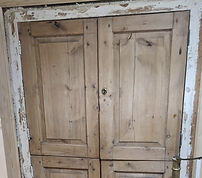
During restoration of the early‑18th‑century linen‑press doors at Milton of Finavon, we uncovered something quietly remarkable: a single, deliberate scorch mark on the upper stile of the right‑hand door. At first glance it looks accidental, but its position, form, and relationship to the surviving paint layers tell a very different story.
These doors were never intended to be bare wood. From the moment they were installed as part of the early‑Georgian modernisation of the house, they were painted or stained. Traces of that first finish still cling to the grain. The scorch mark sits beneath those layers. That means the burn was made before the doors were ever painted — in other words, at the moment they were first fitted, around 1715–1725.
And this is where the meaning becomes clear.
This is an apotropaic burn: a ritual protection mark. Across Britain, from the late 1500s into the early 18th century, households used small, controlled scorch marks to protect vulnerable places from misfortune and witchcraft. Linen presses were especially favoured. Linen was valuable, symbolically “pure”, and believed to be spiritually exposed. A single burn on the stile of a cupboard door was thought to guard the contents within.
Today the burn appears recessed into the stile. This is simply the result of time: scorched wood ages and erodes faster than healthy fibres, so the mark has slowly sunk back as the surrounding timber continued to move and settle.
These marks were not made by joiners or lairds. They were made by the people who actually managed the linen — the housekeeper, the senior maid, the woman whose responsibility it was to keep the household’s fabric safe. It was a quiet, practical act, done without ceremony, and usually without comment. A small gesture of protection, sealed forever under the first coat of paint.
The other dark horizontal impressions at the top and bottom of the stiles are not ritual marks. They are the scars of the joiner’s bench — compression from the dogs and stops that held the timber steady while it was planed. They tell the story of the workshop. The burn tells the story of the household.
Together, they give us a rare glimpse into two worlds at once:
the craft that made the doors, and the beliefs of the people who lived with them.
This is a small mark, but a significant one. It reminds us that even as Milton of FInavon was being modernised with Georgian refinement, older protective traditions were still alive in the hands of the people who kept the house running. A single scorch, made three centuries ago, still doing its quiet work.